Updates

T 20 Match between Bangladesh & West Indians Starts Today. Pray for our Brother. Sabash Bangladesh. Egie jao. Mar Ghurie.

This is default featured post 1 title

Heart Leaps When Rain Drops.

This is default featured post 2 title

Dream of Green Home In Green.

This is default featured post 3 title

Makes The world more Beautifull.

This is default featured post 4 title

Go to Blogger edit html and find these sentences.Now replace these sentences with your own descriptions.

This is default featured post 5 title

Go to Blogger edit html and find these sentences.Now replace these sentences with your own descriptions.

Tuesday, October 11, 2011

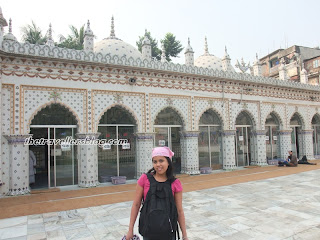
SITARA MOSQUE

About 350m north of the Armenian church you’ll come to Sitara Mosque (Star Mosque, Armanitola Rd), one of the city’s most popular tourist attractions. Its striking mosaic decoration makes it look like your granny’s best teacups. The mosques dates from the early 18th century, but has been radically altered. It was originally built in the typical Mughal style, with four corner towers. Around 50 years ago a local businessman financed its redecoration with Japanese and English china-tiles, and the addition of anew varanda. If you look hard we can see tiles illustrated with pictures of Mt Fuji. Non –Muslims are normally welcome outside of prayer time, but you should dress appropriately and women should bring something with which to cover their hair. Sitara Mosque is pictured on the Tk 100 note.




SIGHTS

AHSAN MANZIL
About 600m west of sadarghat is the must-see
Ahsan Manzil (pink place; Ahsanullah Rd; admison TK 2 10.30am-5.30pm Sat-Wed,3-7.30pm Fri Apr-Sep,9.30am-4.30pm Sat–Wed, 3-7.30pm Fri Oct-Mar), one of the most interesting buildings in Dhaka.

Dating from 1872, Ahsan Manzil was built on the site of an old French factory by Nawab Abdul Gahni (landowner). Some 16 years after the place’s construction, it was damaged by a tornado. It was altered during restoration, becoming even grander than before. Lord Curzon stayed here whenever he came to visit. After the death of the nawab and his son, the family fortune was dispersed and the place eventually fell into disrepair. It was saved from oblivion by massive restoration in the late 1980s, aided by photos of each of the 23 rooms, taken during the high point of the palace’s history. The photos are still on display as are various family portraits and the skull of Nawab Abdul Ghanis’s favourite elephant, Feroz Jung.


INFORMATION OF DHAKA

Emergency
Fire (phone: 199)
Police (phone:999)
Gulshan police station (phone: 9880234)
Holy family hospital (phone: 8311721/5)
Bangladesh hospital (phone: 8811751/68 Shadid Tajuddein Sharani, Mohaakaali).

Medical Services
International Centre for Diarrhoeal Disease Research in Bangladesh Hospital (phone:8811751/68 Shadid Tajuddein Sharani, Mohaakaali) Has a traveller’s clinic.
Japanese-Bangladesh Friendship Hospital (phone: 8187575, hose 27, rd 114, gulshan).

Money
Citibank (phone: 9550060, 122-4 Motijheel Northof Dilkusha)
Eastern Bank (PHONE;9556360, Dilkusha Motijheel)
HSBC (PHONE: 01199884722, Gulshan)
Janata Bank (phone:9560000, Dilkusha Circle Motijhee)
Sonali Bank (phone: 9550426/34, Shapla Circle Motijhee )
Standard Chartered Bank (phone: 8821718,14 Kemal Atatuk Ave, Motijheel)

Post
Main Post Office (phone: 9555533, cnr Abdul Ghani and North-South Rds, sun-thu) Near Baitul Mukarram Mosque.

Tourist Information
Parjatan (phone: 8117855/9, 233 Airport Rd) National tourism organisation. Tourist brochures, car rentals and couple of local tour options.

Monday, October 10, 2011

HISTORY OF DHAKA


Founded in the 4th century, Dhaka first received principal status in 1610, when the Mughals transferred the capital from Rajmahal to Dhaka, and renamed it Jahangirnagar. During the Mughal period, Dhaka became the chief commercial emporium. This encouraged a much greater concentration of commerce maritime trade brought industry, Islamic education and increasing sophistication in the arts. Dhaka’s prosperity was also considerably enhanced – the Mughals built mosques, palaces, caravanserais, bazaars and gardens. This development began to attract European traders from southern India.

In 1660 the British East India Company established a trading post in Dhaka; however, Dhaka’s decline as a maritime trade center had already begun . Dhaka remained the capital under the Mughals until 1704, when they moved it to Murshidabad.


The British East India Company extended its power to such an extent that by 1757 it controlled all of Bengal except Dhaka, which it took eight years later. It was under the British, during the late 18th and 19th centuries, that the dominant forms of current economic development were established: indigo, sugar, tea and of course jute.


In 1887 Dhaka became a district capital of Bangladesh, and in 1905 Bengal was divided east and west, the eastern section incorporating Assam (with Dhaka as its winter capital). From this point on Dhaka again began to assume some measure of importance as an administrative center. Government buildings, churches, residential enclaves and educational institutions transformed it into a city of great prosperity. During the existence of East Pakistan, Dhaka was classed as a subsidiary capital, and it was not until independence in 1971 that Dhaka once again achieved its former capital-city status.


Please Make Your City Green to Live evergreen

Please Say Thanks If You Like My Post

Share

Twitter Delicious Facebook Digg Stumbleupon Favorites